
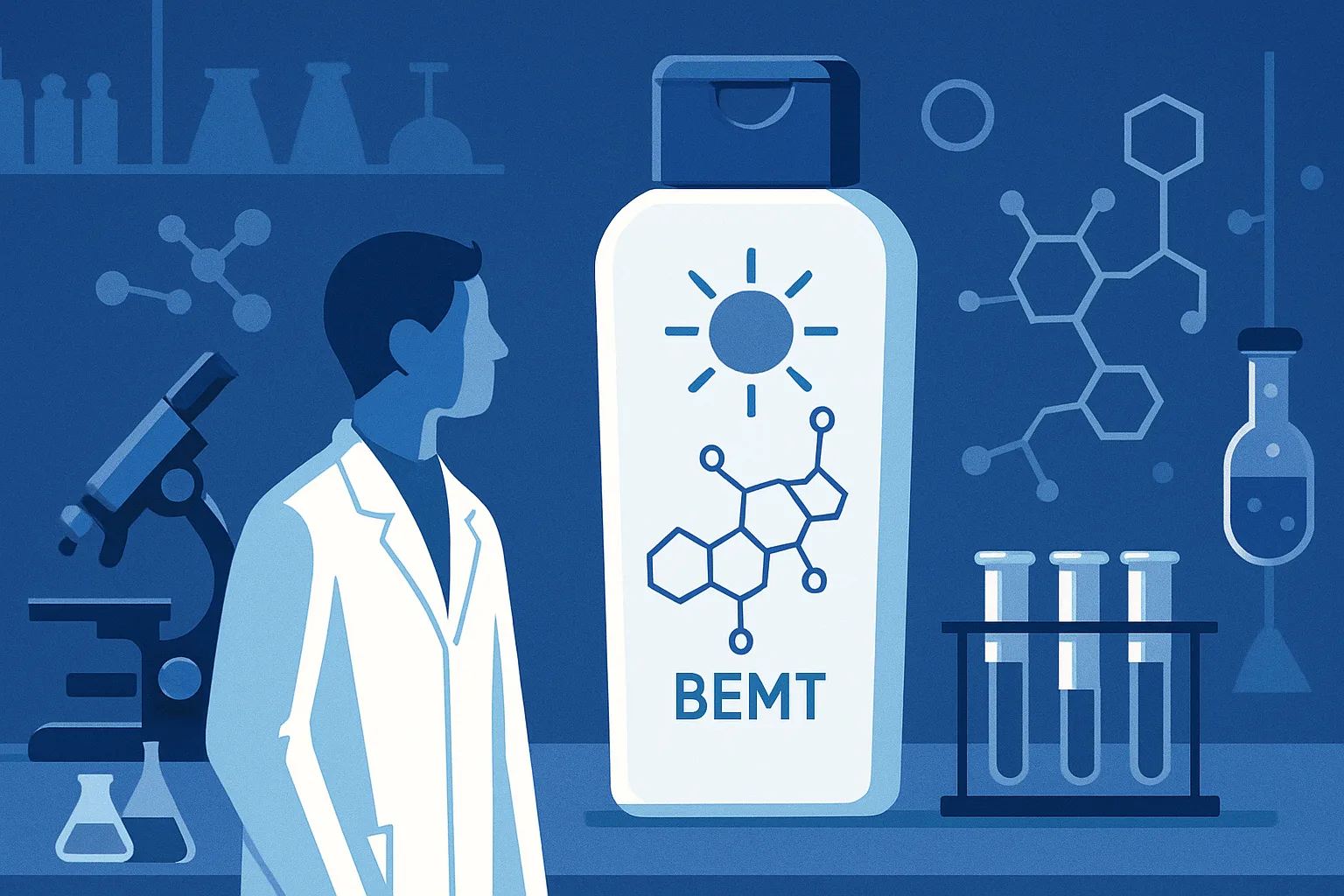
US consumers will soon be able to buy sunscreens that contain bemotrizinol (BEMT), a UV filter that dermatologists have long sought for its ability to protect against burning and aging rays without irritating skin or leaving a white cast.
Neutrogena became the first company to announce the availability of BEMT products in stores, launching two products — Neutrogena Ultra Sheer Daily Face Sunscreen SPF 70 and Neutrogena Clear Face Sunscreen SPF 60 — in mid-September, according to a company spokesperson. CeraVe and La Roche-Posay plan to launch BEMT-containing sunscreens, according to a Washington Post report. The products are expected to retail for $16 to $20.
The US Food and Drug Administration (FDA) first signaled in December 2025 that it planned to approve BEMT as a sunscreen active ingredient. The agency formally approved it in June, allowing its use in concentrations up to 6% in sunscreens for adults and for children aged 6 months or older. It is the first new sunscreen ingredient approved by the FDA since 1999.
BEMT is already used in sunscreens sold in Europe, Canada, and Asia. Swiss chemical company DSM-Firmenich first sought FDA approval in 2018 and resubmitted data in late 2024. The FDA found that the ingredient provides protection against both UVA and UVB rays, has low skin absorption, and rarely causes skin irritation.
Adam Friedman, MD, professor and chair of dermatology at George Washington University in Washington, DC, told Medscape that BEMT products should be "a huge step forward" in making sunscreens more pleasant to use, noting that the ingredient feels superior to other filters and does not leave a white cast. He cautioned patients to opt for higher SPF products, as most people do not apply the recommended amount of sunscreen, leading to lower effectiveness.
Consumer advocacy group Environmental Working Group (EWG) also welcomed the FDA approval, saying BEMT improves sunscreen effectiveness and provides a stable, non-mineral option that doesn't break down in the sun. The group has previously highlighted that many US sunscreens do not offer adequate protection against UVA rays, which contribute to skin cancer and premature aging.
Friedman noted that the increased media coverage could help raise awareness about sunscreen's importance, particularly as misinformation about chemical filters has left some patients wary of using sun protection.
Alicia Ault is a Saint Petersburg, Florida-based freelance journalist whose work has appeared in publications including Medscape Medical News, The Washington Post, Smithsonian, and The New York Times.
For more news, follow Medscape on Facebook, X (formerly known as Twitter), Instagram, and YouTube.